When the Lights Stay On: How Storm Hardening Is Reshaping Utility Capital Spending
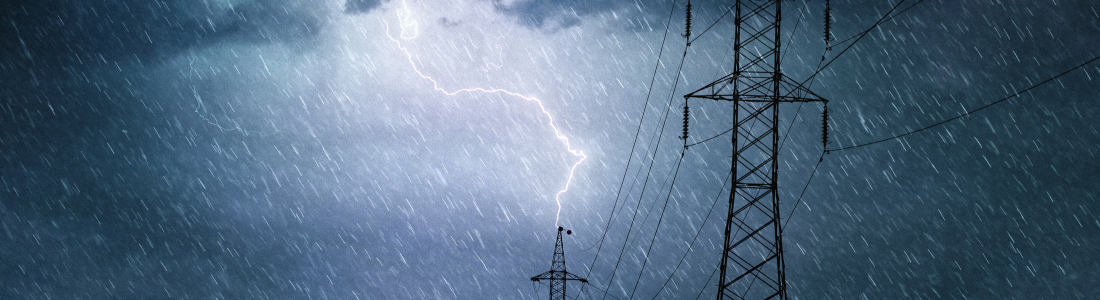
Weather has become one of the most consequential threats to the U.S. power grid, and utilities are responding with some of the largest, most durable capital programs in the industry's history. According to FMI's 2026 Energy and Power Overview, weather events have driven roughly 80% of U.S. electricity outages since 2000. Most of that damage has occurred in the last decade , concentrated on the distribution systems that carry power the final miles into homes and businesses.
That reality is reshaping how utilities plan, spend, and contract for work. It's why storm hardening and physical grid resilience have become one of the largest and fastest-growing categories of utility capital spending nationwide.
A Shift from Discretionary to Durable
For years, hardening work — pole replacement, undergrounding, vegetation management, substation flood-proofing — competed with other priorities for discretionary capital. That's changing. Today’s programs are increasingly funded through dedicated rate-case mechanisms rather than general capital budgets, giving them a far more stable, streamlined and recurring spending profile. In practical terms, hardening work is moving from "if the budget allows" to "when the commission approves,” a much stronger foundation for long-term planning.
The Scale Is Already Visible
The report points to a wave of large, state-specific programs already underway:
- Florida: Operating under a regulator-imposed storm hardening mandate since 2007, Florida has become the model other states are studying. Duke Energy Florida alone replaced more than 2,000 poles with stronger materials in 2025 and expanded self-healing grid technology that prevented over 215,000 hours of outages, part of a five-year, $16 billion capital plan.
- Texas: Oncor's System Resiliency Plan, approved by the Public Utility Commission of Texas on November 14, 2024, represents approximately $3 billion over four years. Scope includes overhead hardening of poles and crossarms, underground cable injection and switchgear automation, distribution automation, expanded vegetation management, and cybersecurity. The company has described its service territory as experiencing roughly one major storm every 12 days.
- New York: The Public Service Commission approved climate resilience plans for four major utilities in December 2024 under a 2022 statutory mandate, covering critical-facility circuit hardening, substation flood protection and vegetation management, with costs recovered through a dedicated surcharge
- Georgia: Georgia Power exceeded its own distribution project targets in 2025 and has more than 1,000 miles of new transmission planned as part of a 10-year buildout.
- California: Utilities have spent over $15 billion on wildfire mitigation since 2019, with PG&E alone committing roughly $18 billion through 2025, including undergrounding 1,230 miles of distribution line in its highest-risk areas.
Such investments are not limited to states with long-standing regulatory frameworks. In Illinois, Ameren has reinforced critical stretches of its higher-voltage lines with composite poles installed roughly every fifth pole. The strategy has also demonstrated its value elsewhere in Ameren's system. During a March 2025 severe-weather outbreak that broke more than 400 poles across Missouri and Illinois, an EF-2 tornado struck a recently storm-hardened line near Wildwood, Missouri. Although multiple wood poles were knocked down, the composite poles held, helping prevent a larger cascading failure.
Why This Matters Beyond the Headlines
This is one piece of a much larger structural story. As our Energy and Power sector report lays out, U.S. power construction spending is projected to grow from $158 billion in 2025 to $255 billion in 2030 — a 10% annual growth rate, roughly double the pace of the prior 15 years. Electric transmission and distribution, where hardening work sits, leads that construction volume through the end of the decade. Regulatory action is reinforcing the trend too: FERC Order 1920's 20-year transmission planning mandate and NERC's new extreme weather standards are converting what used to be discretionary capital programs into durable, compliance-driven, long-term recurring revenue streams for the service providers who deliver this work.
What It Means for the Market
For service providers, the growth path in storm hardening looks different than in other utility-services segments. Utilities procure this work through long-term master service agreements that reward scale, safety records and regional presence. This means organic growth and a proven track record, are the primary levers. That said, M&A is following its own logic, with acquirers buying crew capacity, truck fleets and utility relationships rather than pure technical differentiation in order to be able to access today’s spending without the often multi-year ramp required for new entrants serving a utility system.
The Takeaway
Storm hardening isn't a side effect of a bad wildfire season or a rough hurricane year. It’s becoming a core component of utility infrastructure, funded and built to last for decades. As rate-case mechanisms replace discretionary budgets, and states beyond Florida and California adopt similar frameworks, the storm hardening category is positioned to remain a durable source of power construction through the end of the decade.
For a full breakdown of the trends shaping generation, transmission and distribution, oil and gas, and the current M&A landscape across the energy and power sector, see FMI's complete 2026 Energy and Power Overview: First Edition.
Connect With Our Energy and Power Team:
Blake Angelo — Partner, FMI Consulting [email protected]
Evan Fairmont — Partner, FMI Consulting [email protected]
Russell Clarke — Managing Director, FMI Capital Advisors [email protected]
Andrew Henderson — Managing Director, FMI Capital Advisors [email protected]